
Bee, Wasp & Hornet Control
Bee, Wasp & Hornet Control in Southern Connecticut
Bees, wasps, and hornets are common throughout Connecticut, especially during warmer months when nests become active around homes, businesses, decks, rooflines, sheds, and landscaping. While many stinging insects serve an important environmental role, colonies located too close to doors, walkways, play areas, outdoor living spaces, or occupied buildings can create a safety concern. Soundview Wildlife Control provides professional bee, wasp, and hornet control throughout Southern Connecticut with an emphasis on accurate identification, targeted treatment, and responsible pest management.
We serve Madison, Guilford, Branford, Clinton, New Haven, Killingworth, New London, and nearby communities across New Haven, Middlesex, and New London Counties. Mature trees, older homes, wooded lots, gardens, sheds, and exterior gaps can provide nesting locations. Wasps and hornets may build beneath eaves, inside wall voids, around soffits, or in trees, while certain bees may use cavities or exposed wood.
The right solution starts with knowing which insect is present. Bees, wasps, and hornets differ in nesting habits, behavior, and how they should be managed. Our technicians inspect the activity, identify the likely species, determine where the nest is positioned, and choose a control approach suited to the property. When beneficial pollinators can be preserved or relocated appropriately, that is considered as part of the service..
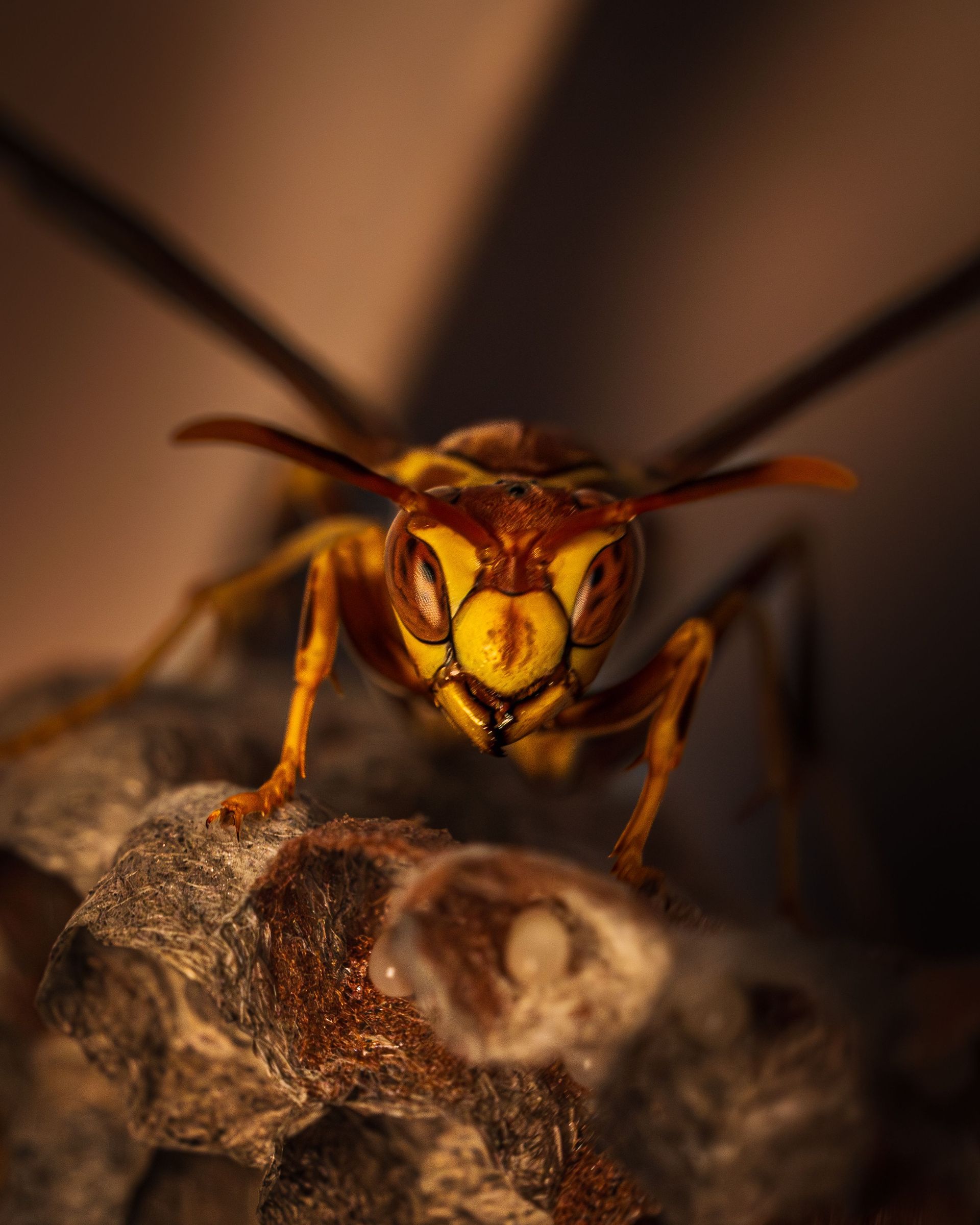
Targeted Stinging Insect Control for Connecticut Properties
Stinging insect activity often increases as temperatures rise and colonies expand. Homeowners may notice frequent buzzing, insects entering a gap near siding, or a visible nest beneath an eave or tree branch. Other colonies remain concealed inside walls, attics, or roof areas, making inspection useful when the source is not obvious.
Our treatment process is based on the species, nest location, colony size, and risk around the area. Bees may be handled differently from aggressive wasps or hornets. When appropriate, bees may be relocated, while wasp and hornet nests may require targeted treatment before removal. Products such as Alpine Dust, Tempo, Demand CS, FastCap, or other professional materials may be selected depending on the site and pest involved.
After active nesting is addressed, we consider what may have allowed the insects to establish there. Openings around soffits, siding, vents, trim, decks, sheds, and exterior penetrations can create protected nesting zones. Sealing accessible gaps, removing abandoned nesting material when appropriate, and reducing repeat nesting conditions can make the property less attractive to future colonies.
Carpenter bees require additional attention because they create galleries in exposed wood rather than building the same type of nest as social wasps or hornets. Deck rails, fascia, trim, fences, and other weathered wood may show round entry holes and staining. Identifying these patterns early can help limit recurring boring activity.
Bee, Wasp & Hornet Control FAQs
Stinging insect problems can develop quickly during spring and summer, especially around properties with flowering landscaping, mature trees, exterior structures, and sheltered building cavities. A nest that begins small may become more active later in the season, increasing the chance of encounters around entrances, patios, yards, and work areas.
Southern Connecticut properties vary in construction and surroundings. Shoreline homes may have exposed roof and siding transitions, while wooded lots can provide nesting habitat in trees, sheds, and landscape features. Knowing whether the nest is exposed or concealed helps determine the safest control plan..
What is the difference between bees, wasps, and hornets?
Bees are important pollinators and are often less defensive away from their nests. Wasps are generally more territorial and may nest in cavities, under eaves, or around structures. Hornets are a type of wasp and can become highly defensive when a nest is disturbed. Correct identification matters because each group may require a different approach.
Are wasp or hornet nests dangerous near a home?
They can be, particularly when a nest is close to doors, decks, walkways, play areas, mailboxes, or other frequently used spaces. Wasps and hornets may sting when they perceive a threat to the colony, and some species can sting repeatedly. Risk is higher for anyone with a known allergy to insect stings.
Should I remove a bee or wasp nest myself?
DIY removal can increase the chance of being stung, especially when the nest is large, hidden, elevated, or located inside a wall or roof area. Spraying the visible entrance may not reach the colony and can sometimes drive insects deeper into a structure. Professional identification and treatment are safer when the nest location or species is uncertain.
How do stinging insects get inside walls or attics?
Wasps and other insects can use small gaps around siding, soffits, fascia, vents, rooflines, utility penetrations, and trim. Once inside a wall or attic void, they may build a nest out of sight while workers continue entering and leaving through the same exterior opening.
Can carpenter bees damage wood?
Yes. Carpenter bees excavate galleries in wood to create nesting areas. Repeated activity can affect decks, fascia, trim, railings, fences, and other exposed wood surfaces. Individual holes may appear minor, but recurring nesting in the same area can lead to more noticeable damage over time.
How can I help prevent bees, wasps, and hornets from returning?
Seal accessible exterior gaps, repair damaged soffits or siding, maintain exposed wood, remove abandoned nests when appropriate, and monitor areas where insects have nested previously. Keeping trash covered and reducing easy food sources outdoors can also help limit activity.
Schedule Bee, Wasp & Hornet Control in Southern Connecticut
If you are seeing heavy stinging insect activity, discovering nests near your home, or noticing insects repeatedly entering the same opening, Soundview Wildlife Control can inspect the property and determine the appropriate next step. We provide bee, wasp, and hornet control throughout Madison, Guilford, Branford, Clinton, New Haven, Killingworth, New London, and nearby Southern Connecticut communities.
Our service is built around careful identification and targeted treatment. We evaluate the species, nest location, activity, and access points before recommending a solution. Service may include treatment, relocation when appropriate, nest removal, exclusion, or prevention recommendations.
Do not intentionally disturb a nest or block an active opening before the insects have been addressed. Concealed colonies can redirect activity into other parts of a structure, while exposed nests may become defensive when disturbed. Professional assessment can help reduce unnecessary risk and make sure the nesting site is properly addressed.
Use the contact form below to describe where you are seeing the insects, whether a nest is visible, and how long the activity has been occurring. Include whether the nest is near a doorway, roofline, deck, wall, tree, shed, or other area so our team can better evaluate your bee, wasp, or hornet control needs in Southern Connecticut.
Contact Us
We will get back to you as soon as possible.
Please try again later.